
BLOG: Designing for Change? Climate change adaptation potential in the World Design Capital.

by Alicia Okeyo
Cape Town – a vibrant city of history, natural beauty, cultural diversity, and innovative design. The International Council of Societies of Industrial Design (ICSID) seems to agree, especially with the latter, as they granted The City of Cape Town’s bid in 2011 to become the World Design Capital (WDC). Three years later, Cape Town now holds the title and a myriad of innovative projects being continuously launched in the city, aimed at transforming the social, economic and developmental landscapes. The benefits of this privilege has been immense for the city’s residents; local designers are able to showcase their unique projects and business ideas, artworks and music, at local craft markets and city spaces such as the urban hub of the Old Biscuit Mill in Woodstock, or in festive township theatres built in shipping containers. There has certainly been enormous wealth generated from design initiatives that have populated the city since the beginning of the year, boosting the city’s economic growth substantially. But with climate change threatening the well-being and longevity of cities throughout the world, it is not enough to focus only on economic growth. Therefore, the pertinent question is, where does climate change adaptation feature in the World Design Capital; is design for adaptation to climate change a reality or a myth in Cape Town?
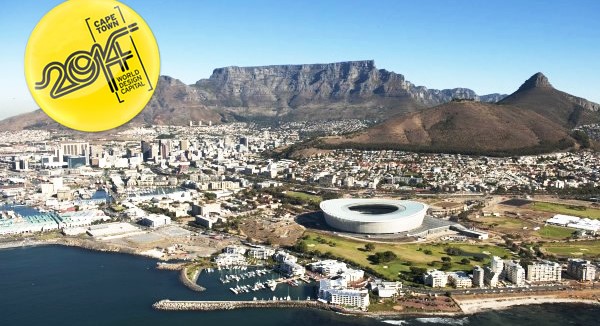
According to the ICSID, by the end of WDC2014 Cape Town would have hosted over 460 design-inspired events and projects submitted or curated under 4 central themes: African Innovation and Global Conservation, Bridging the Divide – design to reconnect the city, Today for Tomorrow – sustainable solutions for people and planet and, lastly, Beautiful Spaces – Beautiful Things. Within these four themes, several clusters exist including lifestyle, business, education and community improvement. But perhaps the most interesting cluster to look at when it comes to climate change adaptation is the Sustainability Solutions cluster. Of the 460-odd projects submitted to the WDC2014, about 62 projects are categorized within this cluster, ranging from urban greening initiatives such as the Green Space Factory Tool ) and Green Roof Urban Incubator, to celebrated organic, responsibly-grown produce in the Eat Out Produce Awards project. As a city as known for its natural beauty as its design initiatives, projects such as these help to beautify city spaces and add to the culture that is revered about our gorgeous city. Cape Town is maximizing on these and other projects to help protect and sustain the natural landscapes. Coastal edge-line reconstruction and management through the Coastal Protection Zone Bylaw, for example, has become a priority of the City of Cape Town as a means to protect the remaining coastline from further infrastructure development. According to UCT PhD researcher, ACDI affiliate and African Centre for Cities’ Anna Taylor, protecting our built-up coastlines is especially vital as an adaptive strategy due to the city’s vulnerability to the effects of climate change through being exposed to storm surges and sea level rise. “Cape Town has many residents and businesses that are already very vulnerable to the effects of winter rainfall and flooding, as well as summer wind and fires. Climate change also threatens to increase the city’s already severe disease burden and aggravate conditions of food insecurity and malnutrition. Hotter, drier conditions, in addition to habitat fragmentation caused by ongoing urban expansion, threatens species extinction and a loss of biodiversity that is key to the city’s heritage, cultural identity and a major contributor to the tourism industry”, Taylor said.
Further efforts are already being made to combat these unfavourable effects. According to Future Cape Town’s article 11 ways Cape Town is planning for Climate Change, it is admirable that the City of Cape Town has taken a firm stance on planning for climate change, which most other South African cities have not yet done. According to the Moving Mountains Report, the City of Cape Town adopted the Integrated Metropolitan Environmental Policy (IMEP) as early as 2001, as the basis of strategies and projects to ensure that sustainable resource conservation is adhered to. Nine years later, in 2010; a crucial year for Cape Town following the acceptance of South Africa’s bid to host the 2010 Soccer World Cup, the City of Cape Town adopted the Energy and Climate Action Plan with 11 objectives including resource efficiency, adaptation to climate finance, sustainable transport and efficient monitoring and evaluation during programme implementation. These were the precursors to the cities’ bid to become the World Design Capital 2014, not only for the international exposure and economic gain that this title brings but also as a means to “reconnect the city’s communities and to support innovative projects that make communities more liveable, low carbon spaces”, Executive Mayor of Cape Town Patricia de Lille said.
The City of Cape Town seems to be making considerable efforts to not only uphold their design capital status but also to offer practical solutions to achieving some of the objectives set out in the Moving Mountains Report, by promoting simple but effective adaptations to the effects of climate change. With the ongoing energy crisis that South Africa faces, Cape Town has dedicated efforts to achieving the objectives of decreasing electricity consumption and exploring alternative renewable energy sources. Part of doing so is the support the city offers to local entrepreneurs such as the NURU Energy Entrepreneurs. The NURU POWERCycle is the world’s first commercially available peddle generator that is aimed at giving Cape Town townships a source of alternative, renewable energy through the NURU light bulbs. As a NURU Energy Entrepreneur in his town of Mayange in Rwanda, Jean Hakizimana received funding from NURU Energy to buy the power cycle and light bulbs, which she is able to rent out at a small fee to her community residents. “Becoming a NURU Energy entrepreneur was the best decision I ever made. I earn more money in an hour a day than I used to make in a week!” Hakizimana said.
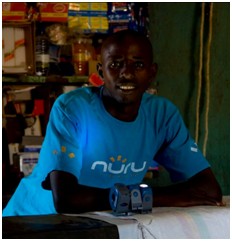
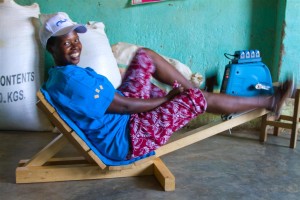
Image: Jean Hakizimana, NURU entrepreneur (left) and the NURU PowerCycle (right).
The City of Cape Town and the WDC2014 have endorsed a similar pilot project launched in a local informal settlement titled the Safe Township Lighting initiative. NURU light bulbs are especially useful in the townships as a safer option than accident-prone paraffin lamps, according to eNCAnews. This may be the foundations for a city-wide household expansion of the project, to supplement the use of electricity in households that may curb the energy crisis long-term. Coupled with this was the realisation that the City of Cape Town needed to raise awareness about energy conservation; through their “Smart Living. Smart Saving” campaign (http://www.capetowngreenmap.co.za/smart-living), they aim to promote climate change information to a general audience.
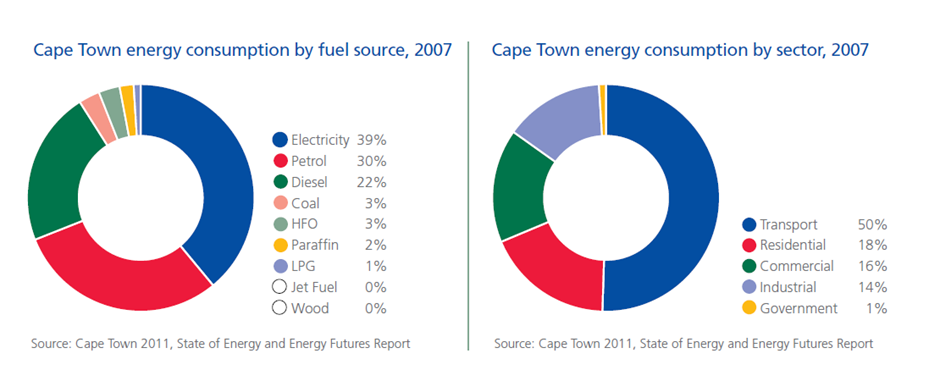
Despite these valid efforts, with increasingly heavy monitoring, regulation and international taxing of carbon emissions, Cape Town’s efforts to adapt to climate change cannot be isolated from efforts to reduce carbon emissions. The City of Cape Town has identified transport as one of the biggest sectors of carbon emissions and aims to develop a more sustainable transport system. Integrated Rapid Transit (IRT) programme launched in 2010 saw the city’s transport system being transformed with a fleet of affordable, energy and fuel efficient MyCiti busses. Dedicated bicycle lanes and pedestrian walks have also been part of the MyCiti programme implementation, promoting more convenient and safe non-motorized transport.
Transport and Residential Electricity consumption are by far the largest contributors to the carbon emission crisis, according to the Cape Town 2011, State of Energy and Energy Futures.
Although there is still considerable potential in renewable wind and solar energy that still has not been tapped into fully in Cape Town, perhaps the flurry of creative design initiatives that the WDC2014 has catalysed will begin to make the objective of reduction energy consumption and carbon emissions a reality in future. WDC2014 initiatives have also already began to contribute to the adaptation to other climate change effects such as food insecurity through social enterprises like Foodpods, and degradation of natural landscapes through projects such as Too Good to Waste . Most of these initiatives also offer a means to generate income, thus also contributing to poverty alleviation.
The potential for functional designs for change is endless; the City of Cape Town must realise, however, the goldmine of knowledge, creativity, and innovation at its fingertips. By partnering with the designers and entrepreneurs featured on the WDC2014, this may better equip them to expand their reach and may have the potential to propel Cape Town to the forefront of climate change adaptation in South Africa. There is potential not only to allow Cape Town to better prepare to deal with climate change but also to limit and manage the risks posed by such changes to local residents, infrastructure and natural environments that are vital for Cape Town’s economy. Adapting to climate change is, after-all, a collaborative effort where diverse thinkers and great talents can come together to tackle the biggest challenge of the century.